The Bayou City
Green’s Bayou isn’t proud. It’s largely ignored, although there is that very nice one mile Cutten Green trail along the levee. It meanders between retention ponds in near northwest Houston, lesser recognized than its neighbors of Spring Creek, White Oak Bayou, and Cypress Creek, to name a few. It’s largely channelized, with grassy slopes.
Green’s Bayou drains the urban area just north of the Sam Houston Tollway 8 and suburban areas to the west. It starts as a concrete channel in the suburban neighborhoods It crosses the Sam Houston Tollway at least three times before discharging to Buffalo Bayou. It takes an odd course, flowing mostly east and a little north, staying north of 8, until it is allowed to meander south through a surprisingly large forested area in northeast houston, then into Buffalo Bayou east of downtown in the massively industrial port area.
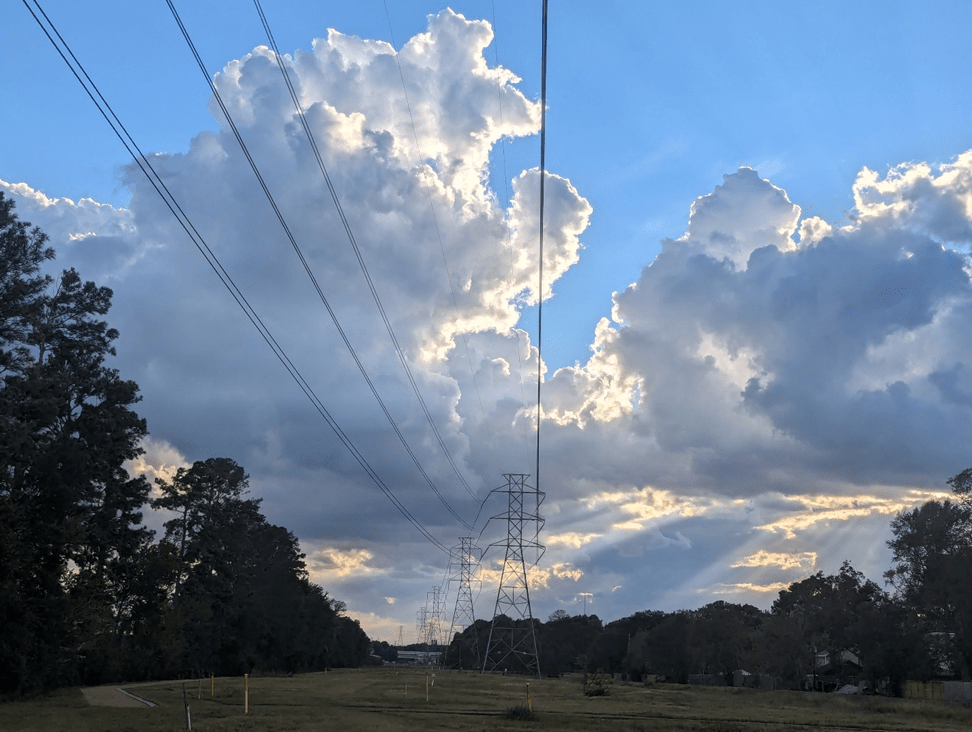
A part of Green’s Bayou is on my daily dog walk. No, I don’t have “a job”.
The bird list includes:
- Two Red-Shouldered Hawks, who appear to be both rivals and friends
- Ibis
- Roseate Spoonbills
- Sandpipers
- Great Egrets
- Herons blue and green and…?
- Robins, at least on Halloween; and
- A rose breasted bristle thighed woodpecker. Joke.
- Many others
Yes, that’s a red shouldered Hawk. My merlin app tells me so.
Invariably, on these walks, the dogs start to see squirrels and the occasional rabbit and become difficult to control. A mockingbird is resident along the trail, there most days by the Hurricane Beryl blow-down to left in the photo below. We can cut over and walk around the retention basins, staying on the turf shoulder all the way to the Tollway, if we want to take the long way around for a four mile walk.
One day there are 2 pairs of the red-shouldered hawks, and I’m pretty sure that one is eyeing my smaller dog, Bruno. It sits on the transmission tower until we come somewhat close and then soars in a thermal overhead, in the sun from our perspective, only 20 feet above. I only notice this when I stop to tie my shoe. I’m pretty sure Bruno was close to being attacked, and it’s lucky I looked up when I did.
The dog park is 1.4 miles away.
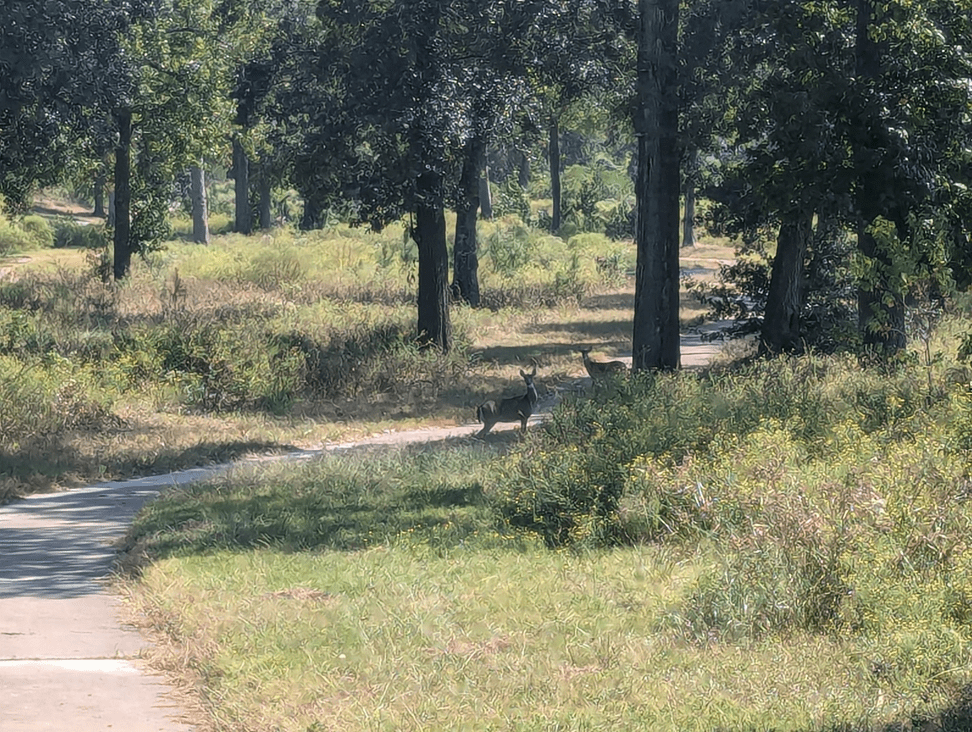
And just Sunday, I found the back way, off of the busy streets, all the way north to the Cypress Creek trail system, about 5 miles north. And today, I rode that again, seeing three white tail deer on the Old Raveneaux Golf Course.
The distribution of wildlife here depends upon the bayous, as wildlife corridors, a network of green space and water sources in the midst of this sprawling city.
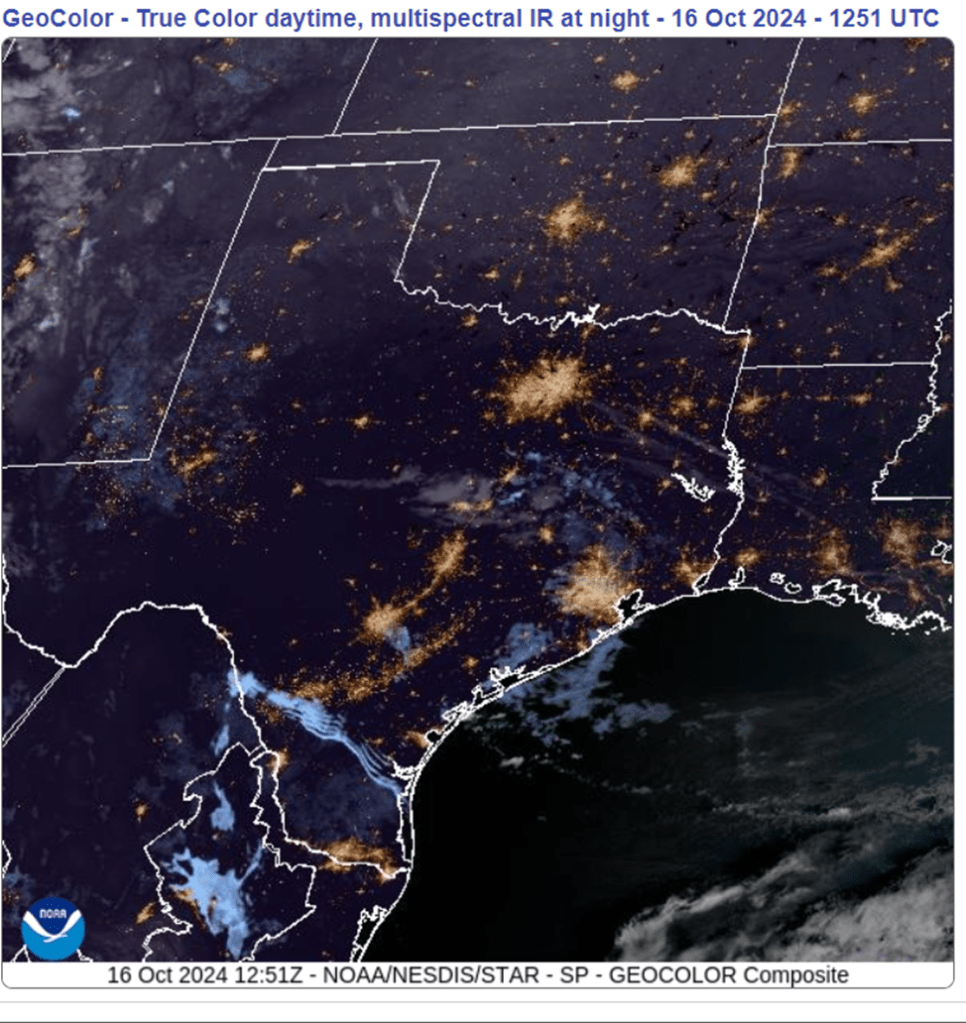
Houston is the 4th largest city by metro area in the USA, and it is huge. A testament to car culture if there was one, it seemlingly took the southern California development model and made it as large as possible in this flat and flood-prone area of coastal Texas. The Houston area, including southern Louisiana all the way to NOLA, is a massive center of the global chemical industry. Thankfully, the laws of physics say that water has to drain, or we would all be underwater all of the time. In Houston these areas, or at least most of them, have been preserved as they are essential to drainage and flood control.
Here are more photos

Yes, Texas cities are huge. Austin and San Antonio, connected by that luminous highway, pretty much define the edge of the Edwards Aquifer. Where people live and work in Texas is defined by geology, including groundwater. Don’t believe me? Keep reading.
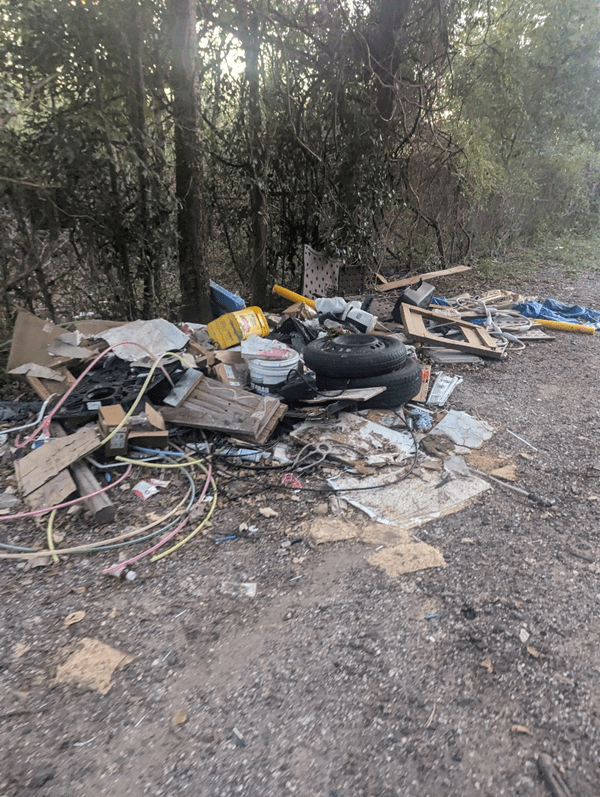
Shiloh Church Road
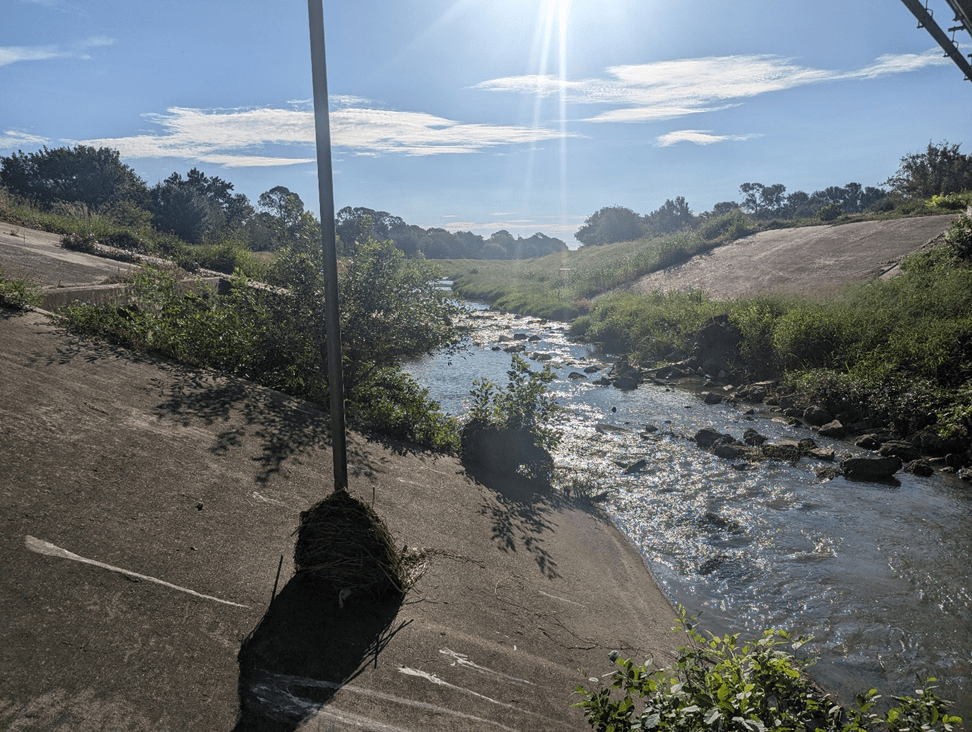
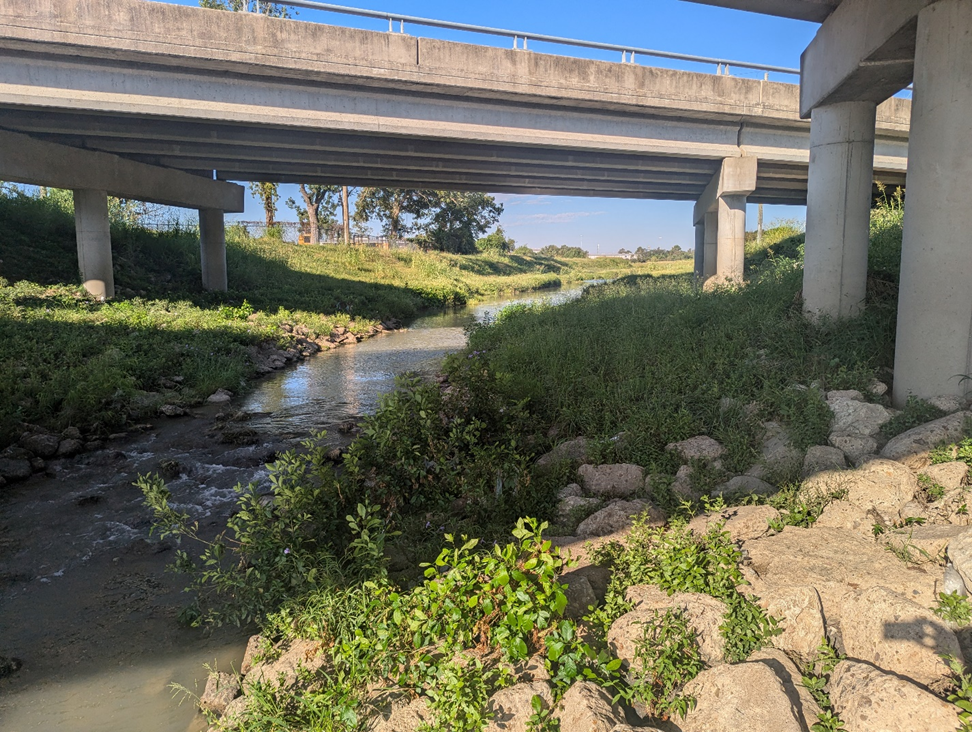
Greens Bayou at the Cutten Overpass
Greens Bayou here always has flow, probably because a MUD WWTP is somewhere upstream, probably more than one. This is a thing here, and many of the small bayous and their tributaries now apparently run perennially because of WWTP discharges. Pretty weird. This can also change their jurisdictional status to that of “waters of the U.S.”
The Municipal Utility Districts (MUDs), who often handle solid waste, wastewater, and potable water are how Houston developers financed utility infrastructure and their operations. From the perspective of a newcomer, the system appears to work fairly well. It allows for small and medium sized operators to make a go of it. Given my experience in the water treatment business our drinking water safety has issues but is generally very good and among the best in the world. Top 3. It’s a big country. Deficiencies are sometimes seen at the State and municipal level, but the technology is there. Drinking water utilities have had a wake-up call in recent years with the latest lead and copper rule, and PFAS regulations will require a whole new stage in most utilities’ level of treatment. Invest in activated carbon.
 Graham Knopp's Blog
Please leave a comment. I will respond.