The huge amount of misinformation around 3I/ATLAS is annoying.
Let’s stick to the facts. The 3I/ATLAS radio “signal” was from a radio observatory and detected OH in absorption in the bounced signal, which is what one expects for a cometary object.
The object is still very strange, of course, given the trajectory alone, which is low probability, with low inclination to the ecliptic. The timing is also low probability, with its orbit making a close approach to Jupiter on March 16, 2026 at a distance of 749 Jupiter radii, not really close enough to significantly alter the path of 3I/ATLAS more than a few degrees.
Sorry, it won’t be passing near the Earth (probably, jk).
The tail has been odd but might be explained by variations in the solar wind.
There are other problems with the alien spacecraft hypothesis. One is its velocity of about 53 km/s before pickup speed as it headed towards this Sun. 53 km/s is only about 0.0002 c, so it would have been in interstellar space for at least thousands of years. (This could be hedged with even more outlandish proposals.) A strong counter-argument to the spacecraft hypothesis is the mass loss. Why would a spacecraft outgas like that? Furthermore, the non-Keplerian motion is along the lines of what we expect from anti-solar jet acceleration, i.e., a comet or natural object (prove me wrong).
The reality is probably more something along the lines of this object is representative of a rare population of objects ejected from inner planetary systems during planet formation in particular chaotic planetary systems possibly involving binary systems, systems with brown dwarfs, and so on. Dynamical gravitational models predict ejections. This process could provide more metal rich objects while likely also having ices.
This post is motivated not by Avi Loeb’s posts, but by those other outlets including AI-driven media, that have seized on non-factual narratives.
So, there’s that, as they say in Wisconsin.
Texas is a strange place.
Texas has two seasons, complaining that it’s too hot to go outside, and complaining it’s too cold to go outside.
Seriously, there are people who work outside in Texas, and they’ve earned the right to complain. These people deserve some privilege. Most everyone else in Texas else fears the outdoors and seeks climate control. These folks should probably move to Wisconsin or Minnesota. Then they might appreciate a brisk and slightly breezy autumn day and would find ways outside. You might need a jacket and a hat. Of course, that’s not all, and Texas is a buggy and thorny place, if one ventures off of trail.
Here’s a simple test. Are you in Texas right now? Are you standing outside? If so, it’s likely that you are standing on a fire ant hill.
OK, that’s hyperbole, but it has happened to me many times, as you can apparently teach an old dog new tricks, it just takes hundreds of fire ant bites. I can’t wait for the first flood I experience here when I expect to see their foaming, floating masses in the waters.
Someone just flipped the weather switch here and we went from 90 degree days to 70 degree days and nights in the 40s.
On such days Texas in November is beautiful. Sublime.
If you live there, however, you might just be stuck in traffic. Again, I would note this is another reason Texas is so strange. 95% of it is empty land, but if you live there you are probably stuck in traffic several times per week. And there always has to be somebody to blame, so it’s often Californians. And there is some truth to this, if you’ve visited the Austin Metropolitan Area lately. The churches in the nearby hill country have been converted into wineries, really Texas versions of their Napa and Sonoma cousins. A few manage some attempts at Tuscan design, but they are constrained by geology, and the engineers rely upon spread footings and lightweight structures given the area’s proclivity to voids, caves, and, moreover, expansive clays and hard limestone bedrock. So, the Hill Country wineries are strip malls, of course. Texas has the biggest strip malls.
And I’m certain there are Napa Valley investors out here, as there are many Californian real estate speculators, as the Hill Country, unfortunately, has adopted a Californian development model, importing their fondness for building in hilly areas and placing modernist homes on top of limestone bluffs. In this area everything useable has to be paved, or the limestone soils turn to a slippery mud when it rains.
It’s not really fair to pick on Californians, only. The Texas development model shares much with that of California’s and the suburbs are often indistinguishable, apart from, perhaps, dry, chaparral ridgelines in the background of the California homes. Hills and Oaks, both Texas and California share like brothers.
The similarities are much deeper. California, like Texas, was an early oil producing State. Both have important agricultural and manufacturing sectors, trade with Mexico, immigrant populations, etc. Then there are the water issues, which pose cities and farmers against each other.
Come to think of it, California and Texas are a lot alike! Say it ain’t so, y’all! But yes, minus the giant trees and mountains, and a volcano or two, Texas and California are, in fact, pretty similar. Perhaps not in politics, you might say. We’ll there’s where the truth is more interesting. Both California and Texas have relatively strong State governments. And while Texans loathe the Federal government, they appear to take pride in Texas State government overreach.
For instance, of the 16 Texas State ballot measures passed on November 4, 2025, all passed. I’ve never seen such a thing. Such deference and trust for State government. Even in purple Wisconsin it was hard to pass ballot measures, as skepticism ran high. But not in Texas. The State government can do no wrong for voters. Perhaps that’s too broad a brush, and the right wing coalition between Hispanics, evangelicals, and Oil and Gas money will fracture, reduced to two out of three, perhaps.
This is an ongoing theme, and an argument that will be well-developed in forthcoming posts!
An hour past Austin, San Antonio, Waco, San Marcos, Kileen, and a host of other Balcones urban areas the Hill Country really shows its character.
I recently had three days in this area of the Texas Hill Country, in the area around Mason, Llano, and Fredericksburg, bikepacking in the Texas Showdown Slowdown, a 175-mile route with designated camping areas.
In an earlier post about the Guadalupe Mountains I started to discuss land use in Hill Country and beyond.
In these areas agricultural use is constrained by many factors. Soils, water, and topography are principle among them. Water is a key component of the Texas empire. Going generally westward into the State of Texas means more arid regions, as the precipitation is generally in the East, and the western portions are in the rain shadow of the Rocky Mountains. The Gulf coast of course gets Gulf Coast moisture.
Another important visualization to understand Texas is that from Houston to, say, Fort Stockton, a distance of 459 miles as the crow flies, the slope is seven feet per mile on average. Before you hit the Hill Country the slope is about one foot per mile.
This implies a water resource management strategy. Contain flow in the canyons of the Hill Country.
The reservoirs of Texas are many and are vast themselves. Texas apparently has 6,976 reservoirs with a normal storage capacity of 10 acre-feet or larger.
[Of note is Sam Rayburn lake in East Texas on the channel of the Angelina River. It has a surface area of 114,500 acres and a volume of 1.14 million acre feet. It’s a large amount of water that appears to only provide supply for a very small community. It apparently provides hydroelectric power (and flood control), and has lots of camping. But it strikes me as strange that this water is so little utilized. It does not appear to be used for any agricultural irrigation. It’s certainly a recreational resource, but in an area with a lot of water. ]
It does seem like Texas has built reservoirs wherever possible often partly for flood control. It has been suggested the Hill Country needs many more dams to prevent floods like those last summer. Without getting into that issue too much I will say that dams are appropriate for some places, and can help with flood control. But you’d better be dam sure that the dam can handle the storm, and with that we don’t really know where the flood statistics are right now with climate change. We’re clearly in unexplored territory. It’s been demonstrated that diluvian events are becoming more common, as are droughts. And there are maintenance costs, sedimentation, and the direct physical impacts, not to mention eminent domain issues.
I recently watched a terrific Frontline episode about the Hurricane Helene impacts. The journalist, Laura Sullivan, again and again puts together smashing journalism.
On the Guadalupe River is the Canyon Lake Reservoir, which received a vast amount of flood debris from the July 2025 storm. It would be interesting to know the degree of sedimentation from that one event. Locals noted that the lake contained a disgusting, reeking mass of flood debris for weeks after the floods.
The Hill Country is a perfect model for flashy, floody streams, having steep slopes that concentrate runoff quickly, and soils and geologies that don’t receive rainfall readily.
Further, most of the streams are seasonal, and only run in floods. Consider towns like Ozona, or Sonora, or most of the Hill Country and the Edwards Plateau towns. Most have very wide and dry stream channels running through their historic centers.
Ozona, Texas had a flood in 1954 that killed 16. Now, the town contains a football-field wide dry wash complete with large boulders that demonstrate the speed of the flow through the Johnson Draw, which flows into the Devil’s River.
Out past the cities in the Hill Country, the land is all private and fenced, often with 10-foot high game fences. While a few lots here and there have simple two string barbed wire fences, many ranches have tall game fences, and iron gates with stone flanks are common. The wealth sunk into fencing in Texas must be ridiculous. And while there is often evidence of overgrazing, some areas are not grazed much at all.
The lack of active farming and ranching in many areas raises a question. Presumably most of these ranches are operated at a loss. In Hawaii the net profit for ranching was about $40 per head per acre per year, or so I was informed. In Texas costs are certainly lower, but this is still a subsistence activity. So, what gives? How are all of these ranches still around, spending fortunes on fencing? I don’t know the answer but oil and gas are suspects. It may be a common investment scheme to buy a ranch with potential mineral resources, let it absorb some losses, and maybe cash in on oil and gas leases? Is that what’s happening? Or, is it just Texas, and everyone with some money wants to own a ranch? It should be pointed out that perhaps half of the State is owned and used in this manner.
In any case, it’s an interesting land use question we’ll explore.
Until then enjoy a few photos from the Texas Hill Country.
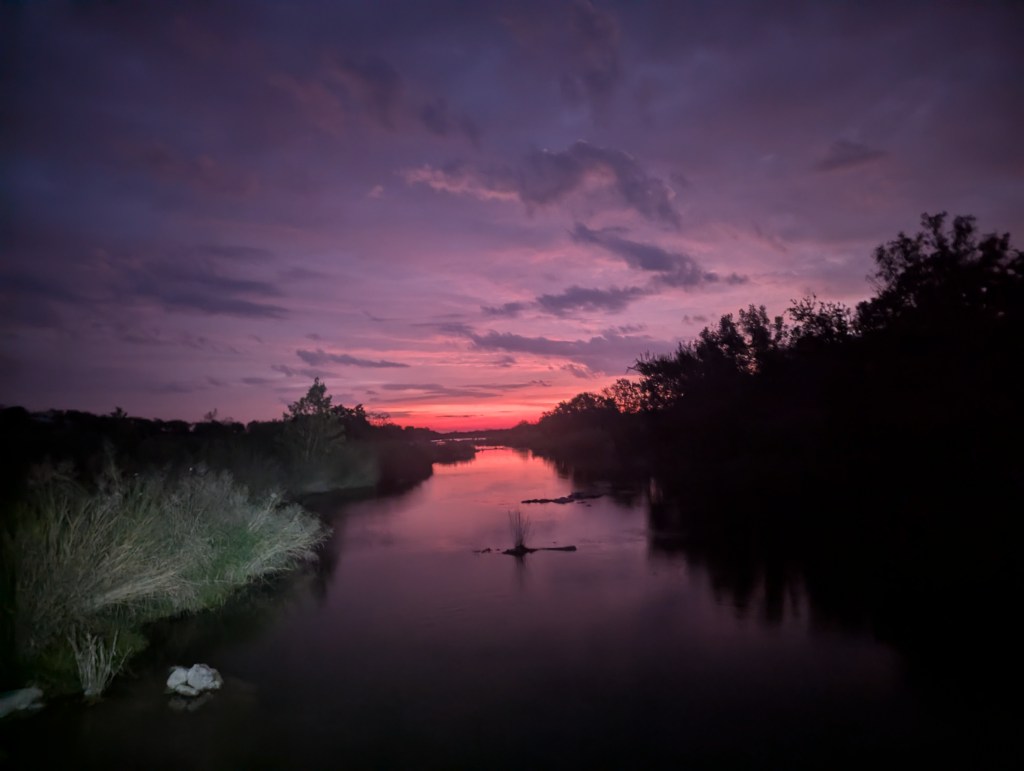
The Llano River at Castel before sunrise.
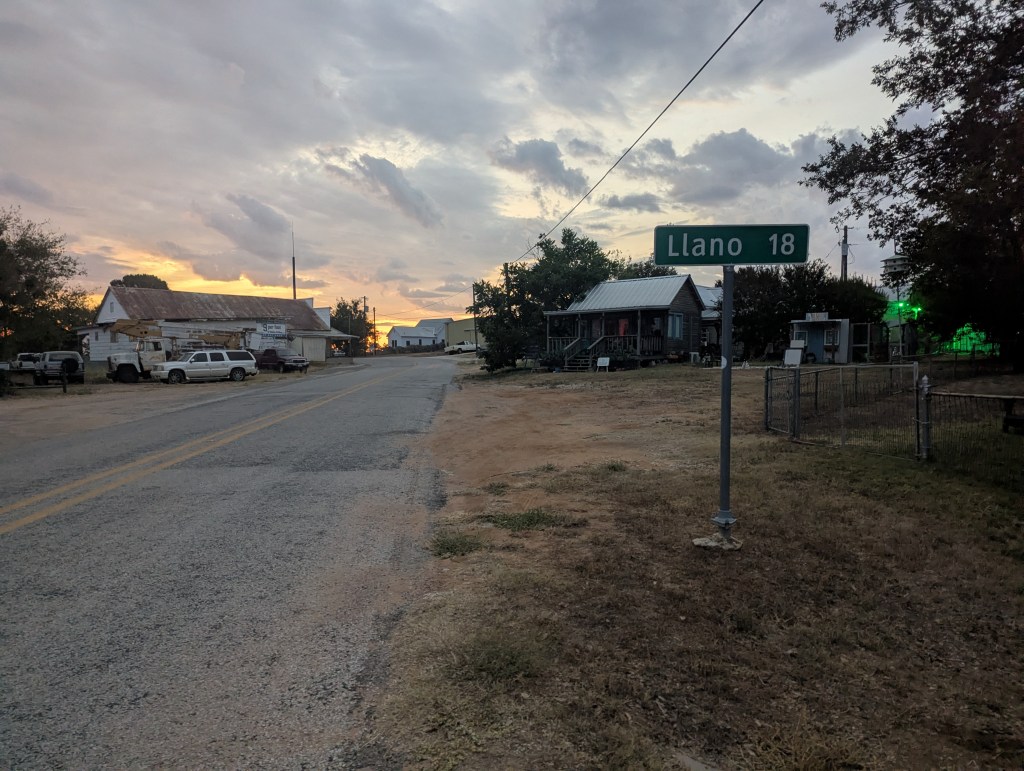
Part of Castel, post office to the left, before sunrise and the start of the Central Texas Showdown gravel rides.

Some of the best gravel cycling, in the world!
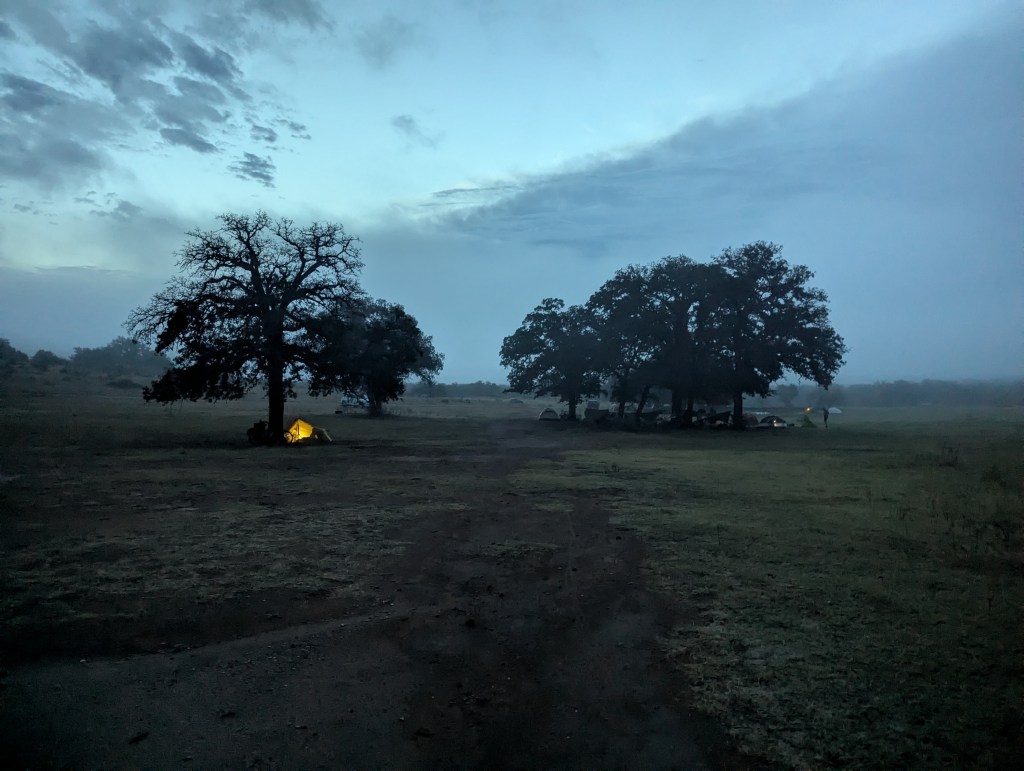
A strong storm hit us the first night and not many slept. This was the campground for the first night south of Llano somewhere. The morning was misty and cool and I was the first to hit the road, thru hiker style.

A paved section as we head southwest into the area of the Hill Country with granite geologies.
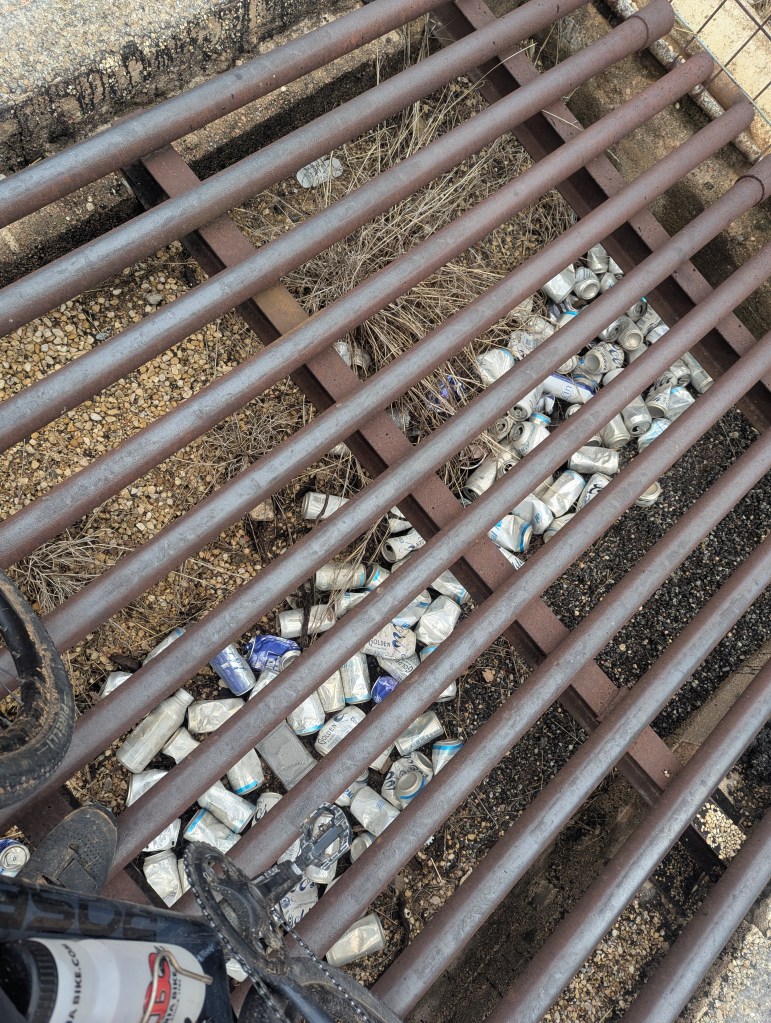
This is how locals dispose of their beer cans while drinking and driving.
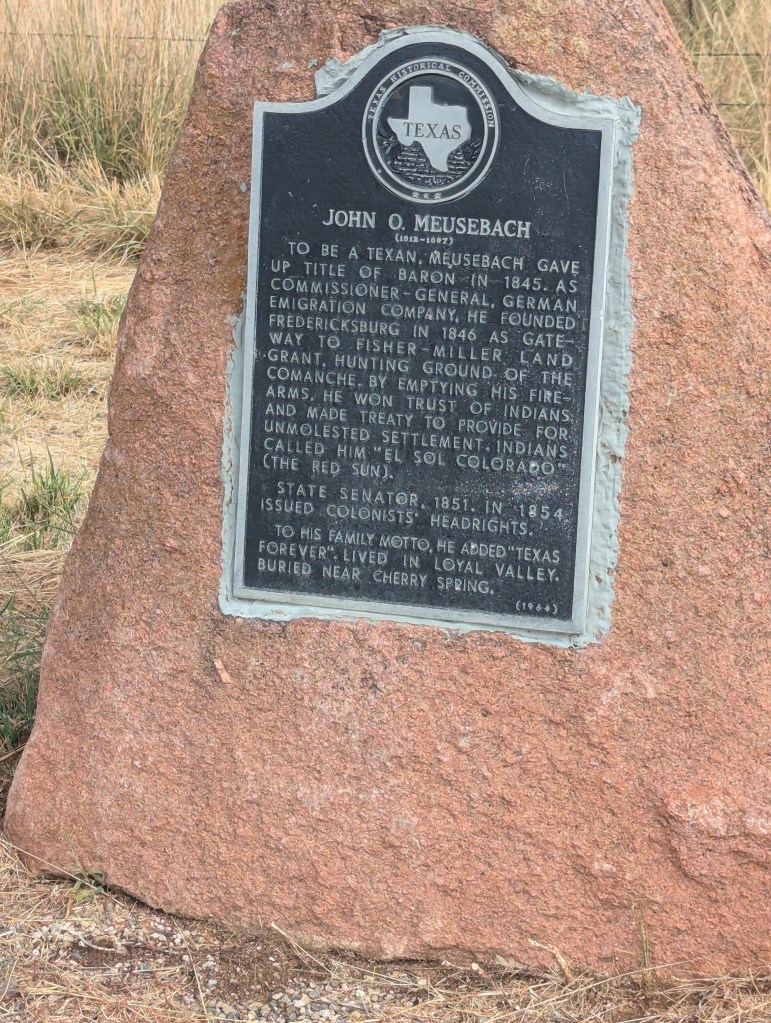
The are many markers that present German immigrant history in the Hill Country.
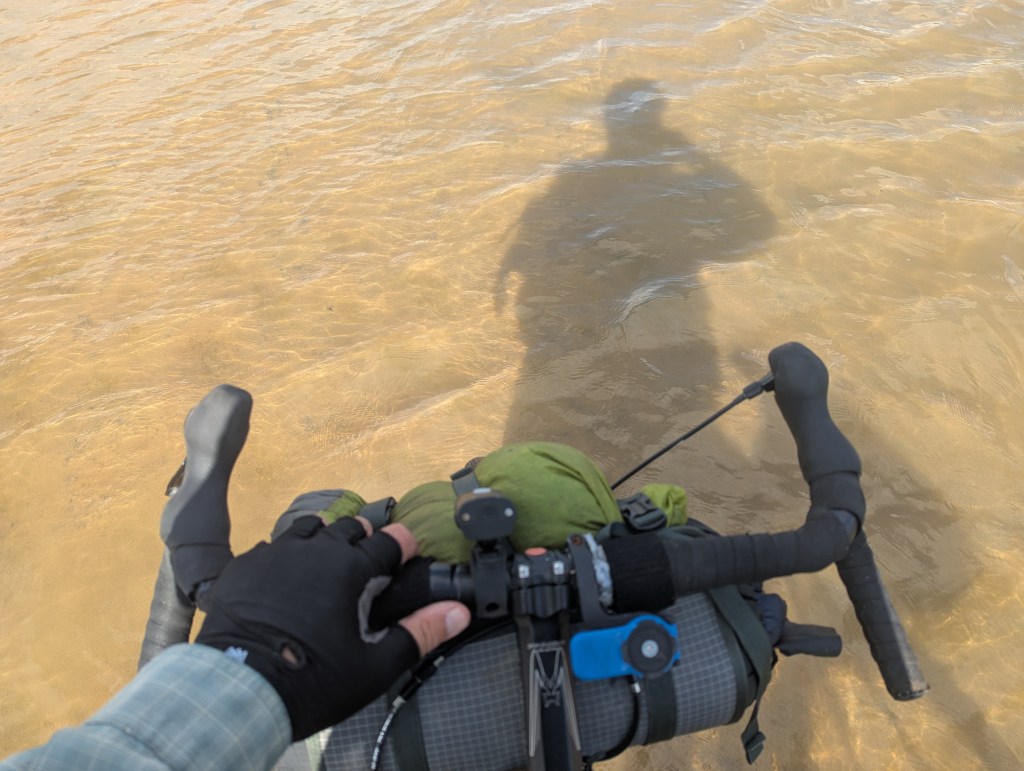
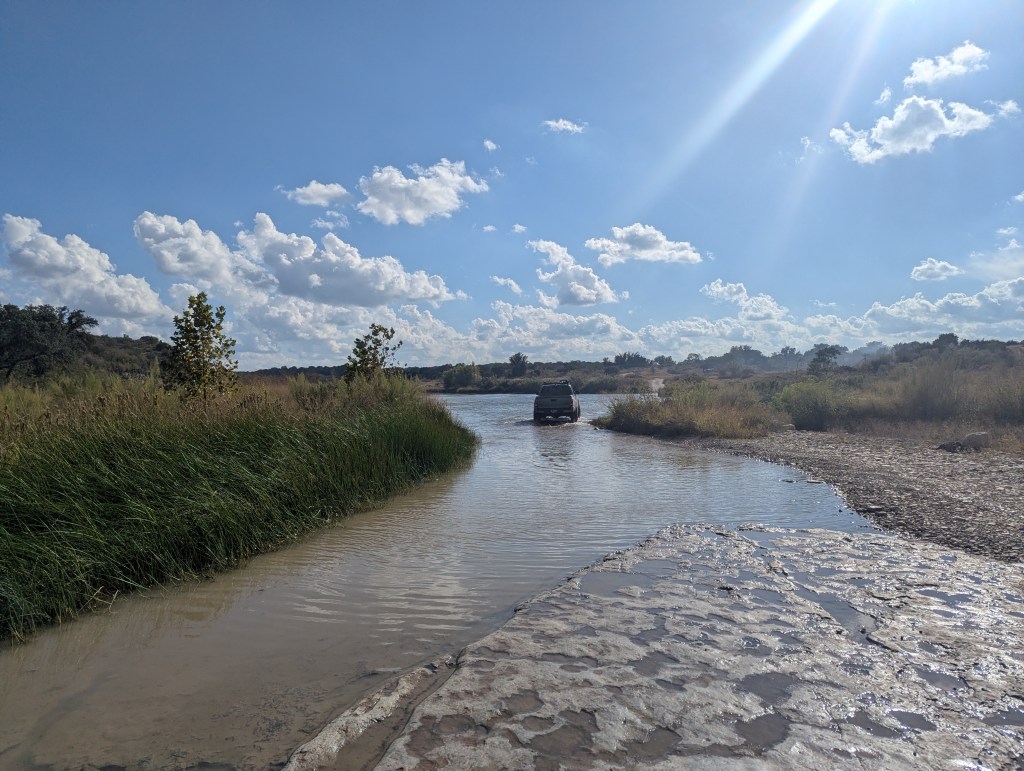
Stream Crossing!
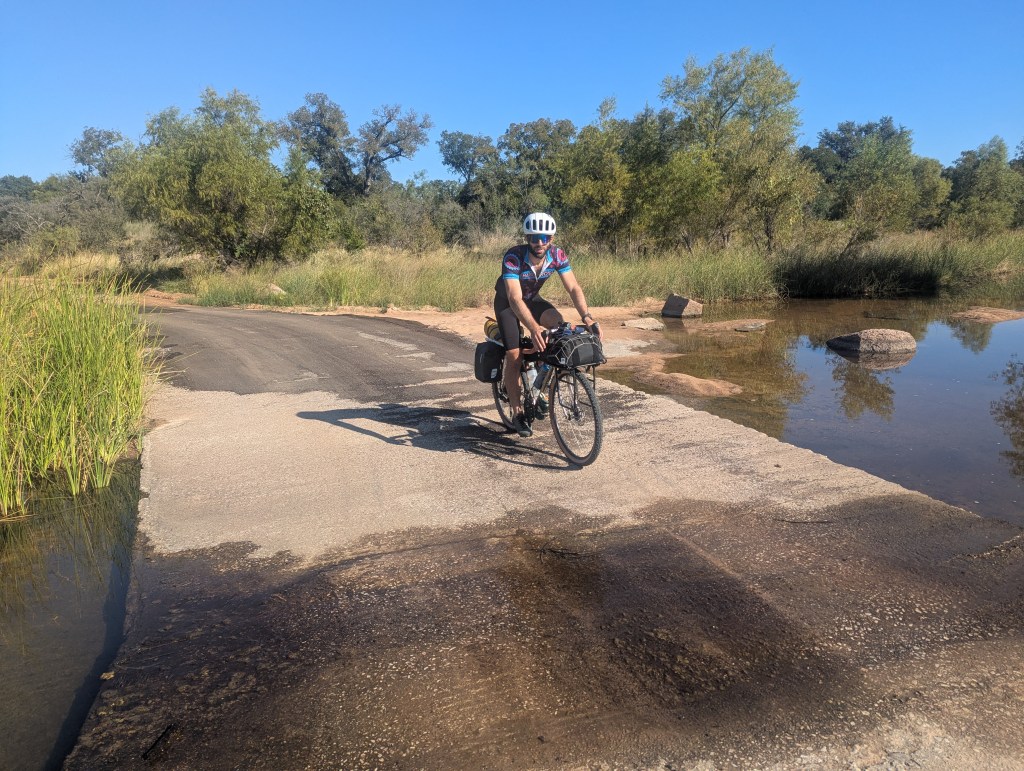
There were about 42 of us on this 3-day self-supported ride.
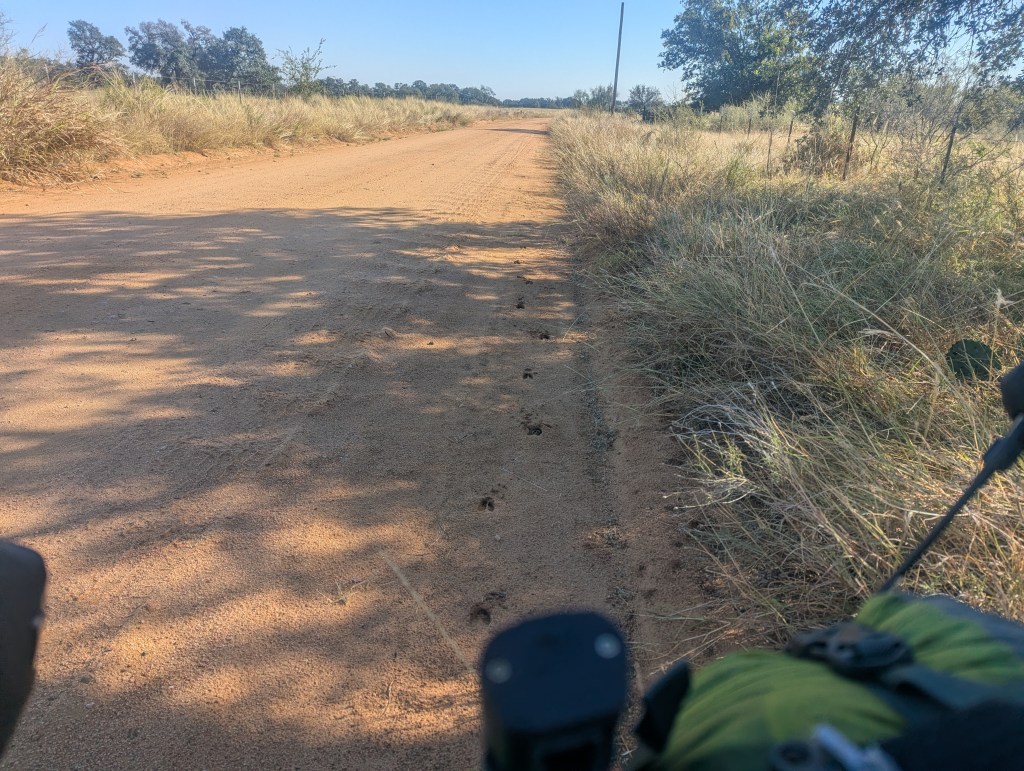
This is what a gravel road looks like.
 Graham Knopp's Blog
Please leave a comment. I will respond.